
Affordable dental implants in Vienna, VA usually mean choosing the option that offers the best long-term value, not simply the lowest advertised fee. The most useful next step is a comprehensive exam and itemized estimate that includes the implant, restoration, imaging, any preparatory treatment, and follow-up care.
Implants often cost more upfront than removable options, but they can provide stronger chewing function and help preserve bone where a tooth is missing. Total cost varies because some patients need only a single implant, while others need extraction, bone grafting, or a more complex restoration.
If you are considering replacing one or more missing teeth with a long-term solution, explore dental implants tailored to your anatomy and restorative goals. Farhoumand Dentistry in Vienna, VA combines clinical evaluation and restorative planning to clarify costs, timelines, and predictable outcomes.
A complete dental implant treatment usually includes three parts: the implant fixture placed in the jaw, the abutment that connects it, and the final crown or other restoration. A low quote may sound appealing if it lists only one part, but that does not reflect the full cost of care.
Fees depend on the number of missing teeth, the location of the implant, bone volume, gum health, implant system, restoration material, and laboratory work. Three-dimensional CBCT imaging may also be recommended to evaluate bone, nerves, and nearby anatomy.
If bone loss has occurred after tooth loss, grafting may be needed to create a stable foundation. Other costs may include extraction, sedation, a temporary tooth, gum disease treatment, or care for a failing older implant.
A written estimate should clearly explain:
For a closer look at pricing details, see cost of dental implants.
Many adults missing one or more teeth may qualify for implant treatment if they have enough bone, manageable health conditions, and gums healthy enough to support healing. Age alone is usually not the deciding factor, but jaw growth must be complete and overall health should support recovery.
Smoking or vaping, uncontrolled diabetes, active gum disease, heavy teeth grinding, certain medications, and a history of radiation to the jaw can increase risk. These issues do not always rule out implants, but they do require careful screening and may change the timing or design of treatment. Research on implant risk factors supports this kind of individualized evaluation.
Some patients also need other problems treated first, especially when common dental problems could require surgery before implant placement. An implant consultation is more than a price quote. It should include a review of medical history, medications, bite forces, oral hygiene, and diagnostic imaging.
Treatment starts with an exam, digital imaging, and a discussion of your restorative goals. If a damaged tooth must be removed or bone must be rebuilt, that may happen before implant placement or at the same visit, depending on the site.
The implant is placed in the jaw during a surgical appointment, usually with local anesthesia. If you want practical guidance before that visit, see preparing for oral surgery.
Over the next several months, the bone may fuse to the implant in a process called osseointegration. Once healing is complete, the abutment and custom crown, bridge, or denture are attached.
Some patients can receive a temporary tooth sooner. However, immediate placement or immediate loading is not right for every case, and immediate loading suitability depends on careful case selection.
An uncomplicated case may take a few months from planning to final restoration. Cases involving extraction healing, grafting, or medical stabilization often take longer.
The most affordable option depends on how many teeth are missing, the condition of nearby teeth, and the maintenance each choice may need over time. A lower starting fee does not always mean a lower lifetime cost.
|
Option |
Main Advantages |
Practical Limitations |
|---|---|---|
|
Single implant and crown |
Does not require shaping adjacent teeth; helps maintain bone at the site |
Higher initial cost; requires surgery and healing |
|
Tooth-supported bridge |
Fixed replacement; often completed faster |
Adjacent teeth must support it; does not preserve bone beneath the missing tooth |
|
Removable partial denture |
Usually lower upfront cost; replaces several teeth |
May move during chewing; requires removal and periodic adjustment |
|
Implant-supported bridge |
Can replace several teeth with fewer implants than one per tooth |
Requires surgery and sufficient bone; hygiene access is important |
|
Implant-supported denture |
Greater stability than many conventional dentures; options such as All-on-4 may provide a streamlined full-arch solution |
Components may need maintenance; cost and surgery are greater than for a conventional denture. Learn more: All On Four dental implants. |
A bridge can make sense when neighboring teeth already need crowns. A removable denture may fit a patient who wants a nonsurgical or lower-cost starting point, while implants may offer better stability for someone who is medically and anatomically eligible.
Dental insurance may help with exams, extractions, crowns, or part of implant treatment, but annual maximums and exclusions are common. Patients can ask the office to submit a predetermination of benefits, while understanding that it is not always a guarantee of payment.
Phased treatment can sometimes spread costs over time. For example, gum health may be stabilized first, then one area restored at a time.
Health savings accounts, flexible spending accounts, in-office payment arrangements, and third-party financing may also help. Review interest rates, fees, and repayment terms carefully before choosing a financing option.
Be cautious with unusually low package prices. Ask whether the fee includes imaging, grafting, the abutment, the final crown, temporary restoration, anesthesia, and follow-up care, and confirm who will perform each stage.
The safest way to compare cost is to compare complete written treatment plans. Price should not be lowered by skipping diagnosis, sterile surgical standards, quality components, or restorative planning.
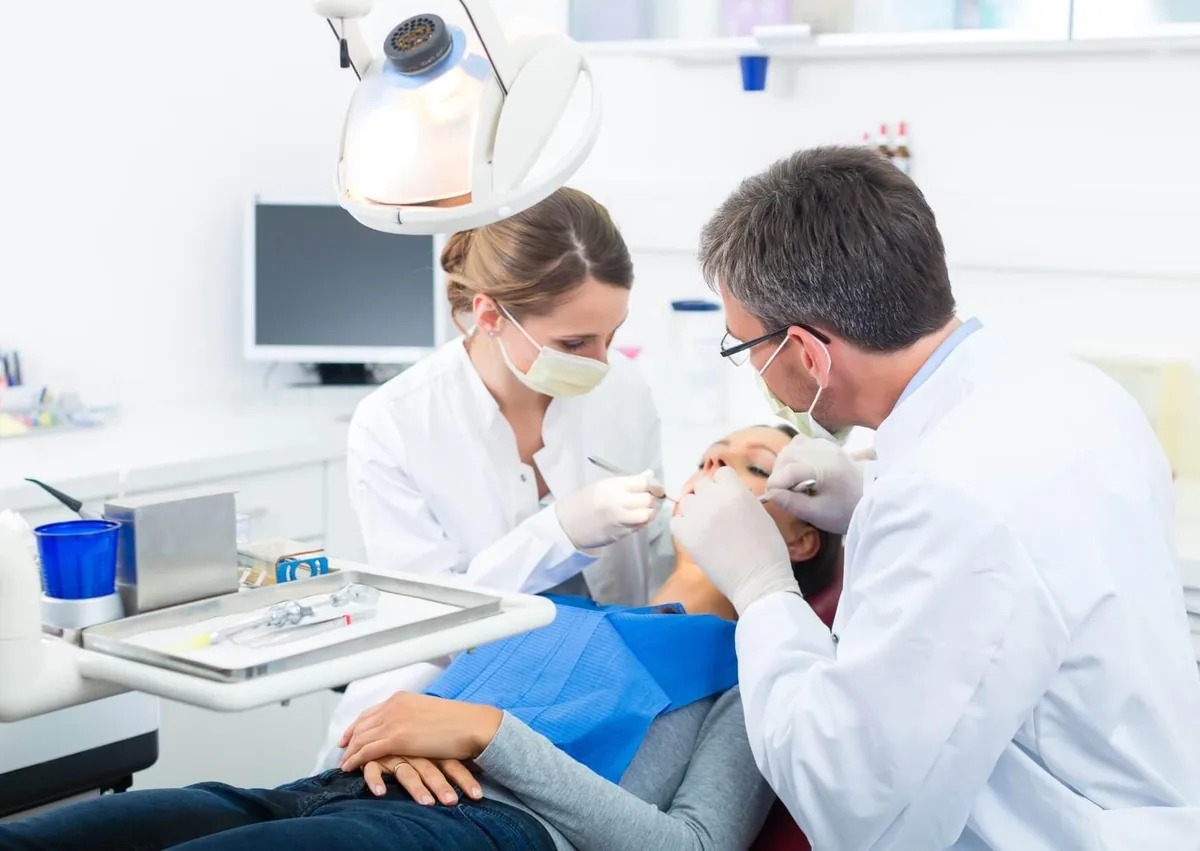
Dental implants can restore appearance and chewing function, but no implant can be guaranteed to last for life. Possible complications include infection, failure to integrate with bone, gum or bone loss, nerve or sinus injury, loose or fractured components, and wear of the crown or denture.
Long-term success depends on daily home care, regular professional maintenance, and control of gum disease and tobacco exposure. Patients who grind their teeth may also need a protective appliance after the restoration is completed.
Evidence on implant survival rates shows why maintenance and risk control matter over time. Even when the implant remains stable, the crown, attachment, or denture may still need repair or replacement later.
After implant surgery, follow the treating clinician's instructions closely. Seek prompt dental or medical attention for uncontrolled bleeding, rapidly increasing swelling, fever with worsening pain, trouble breathing or swallowing, or new persistent numbness.
A sound treatment plan should explain why a specific implant approach is recommended, what alternatives exist, who will handle each stage, and how complications would be managed. Patients can also ask about the dentist's training, implant experience, laboratory standards, maintenance schedule, and expected total cost.
It is also reasonable to ask how the final implant restoration will be designed and maintained. Bring an updated medication list, relevant medical history, insurance information, and questions about your priorities or budget to the consultation.
A careful evaluation helps determine whether implants are appropriate and how treatment can be staged as safely and predictably as possible. That approach is usually the best path to balancing affordability with long-term function.
To confirm whether dental implants are right for you and get an itemized treatment plan, call Farhoumand Dentistry for a focused implant consultation in Vienna, VA. We serve patients from Tysons Corner, VA and McLean, VA for dental implants; call (703) 636-2442 to schedule or ask questions today.
There is no single reliable fee because the total may include the implant fixture, abutment, crown, imaging, extraction, grafting, a temporary tooth, and follow-up care. Request an itemized estimate based on an exam and diagnostic images rather than relying on an advertised starting price.
Some plans cover part of implant treatment, while others exclude implants or apply annual maximums and waiting periods. The dental office can submit a benefit predetermination, but patients should verify exclusions and expected personal responsibility with the insurer.
A lower fee is not automatically unsafe, but the quote should include proper diagnosis, qualified care, recognized components, sterile technique, restorative planning, and follow-up. Extremely low prices may omit necessary stages or apply only to very limited cases.
In selected cases, an implant may be placed at the time of extraction, and sometimes a temporary restoration can be attached. Infection, bone quality, bite forces, and implant stability all affect whether this approach is appropriate.
Implants can function for many years, but longevity varies with health, gum condition, hygiene, smoking, bite forces, and maintenance. The crown, attachment, or denture may need repair or replacement even when the implant itself remains stable.