
Most canker sores heal within two weeks, with pain usually worst in the first few days and then easing as the sore shrinks. Small, minor sores often improve within 7 to 14 days, while larger or deeper sores can last several weeks and should be checked if they are not clearly getting better.
If a canker sore is not healing or keeps returning, a general dentistry visit can identify local causes and options to reduce pain and promote proper healing. Farhoumand Dentistry in Vienna, VA provides comprehensive exams and treatments to address sharp teeth, restorations, or appliances that may delay recovery and to coordinate any needed medical follow-up.
A canker sore, also called an aphthous ulcer, is a shallow sore inside the mouth. It often has a white, yellow, or gray center with a red border and may appear on the inner lip, cheek, tongue, soft palate, or near the gums.
Healing time depends mostly on the sore's size and depth.
|
Canker Sore Type |
Typical Features |
Expected Healing Time |
|---|---|---|
|
Minor |
Small, shallow, one or a few sores |
Usually 7 to 14 days |
|
Major |
Larger, deeper, often more painful |
Several weeks and may scar |
|
Herpetiform |
Clusters of many pinpoint sores that may merge |
Often 1 to 3 weeks |
Minor sores are the most common and usually heal without scarring. Major sores or ulcers that keep coming back deserve professional evaluation because they can resemble other oral conditions or point to an underlying health issue.
Some people notice tingling, burning, or tenderness before the sore appears. Once visible, the ulcer is often most painful for several days before it gradually becomes smaller and less sensitive.
A sore that is healing normally should become less painful and smaller over time. Color changes can happen during healing, but increasing redness, swelling, drainage, or worsening pain is not typical.
Unlike cold sores, canker sores develop inside the mouth and are not caused by herpes simplex virus. They are not contagious, while cold sores usually form blisters on or around the lips and can spread to other people.
The exact cause is not always clear. Common triggers include cheek biting, sharp foods, dental appliances, aggressive brushing, stress, hormonal changes, and sensitivity to certain foods.
Recurring or slow-healing sores can sometimes be linked to nutritional deficiencies, especially low iron, folate, vitamin B12, or zinc. Less often, gastrointestinal disease, immune disorders, medication reactions, or other systemic conditions may be involved.
Ongoing friction can also delay healing. A rough tooth, broken restoration, or poorly fitting appliance may keep irritating the same spot until the source is corrected.
Most minor canker sores can be managed at home while they heal. Choose soft, bland foods, avoid spicy or acidic items, drink enough fluids, and brush gently with a soft-bristled toothbrush.
Over-the-counter protective pastes, gels, or rinses may reduce irritation and discomfort when used as directed. Ask a dentist, physician, or pharmacist before using these products for a child, during pregnancy, or when allergies, medical conditions, or medications could affect safety.
Do not place aspirin directly on the sore because it can burn oral tissue. Avoid picking at the ulcer, and skip alcohol-containing products if they sting or dry the area.
Regular dental checkups help identify problems early and may reduce repeat irritation from dental causes. If you want to know what a visit involves, learn more about a dental check-up.
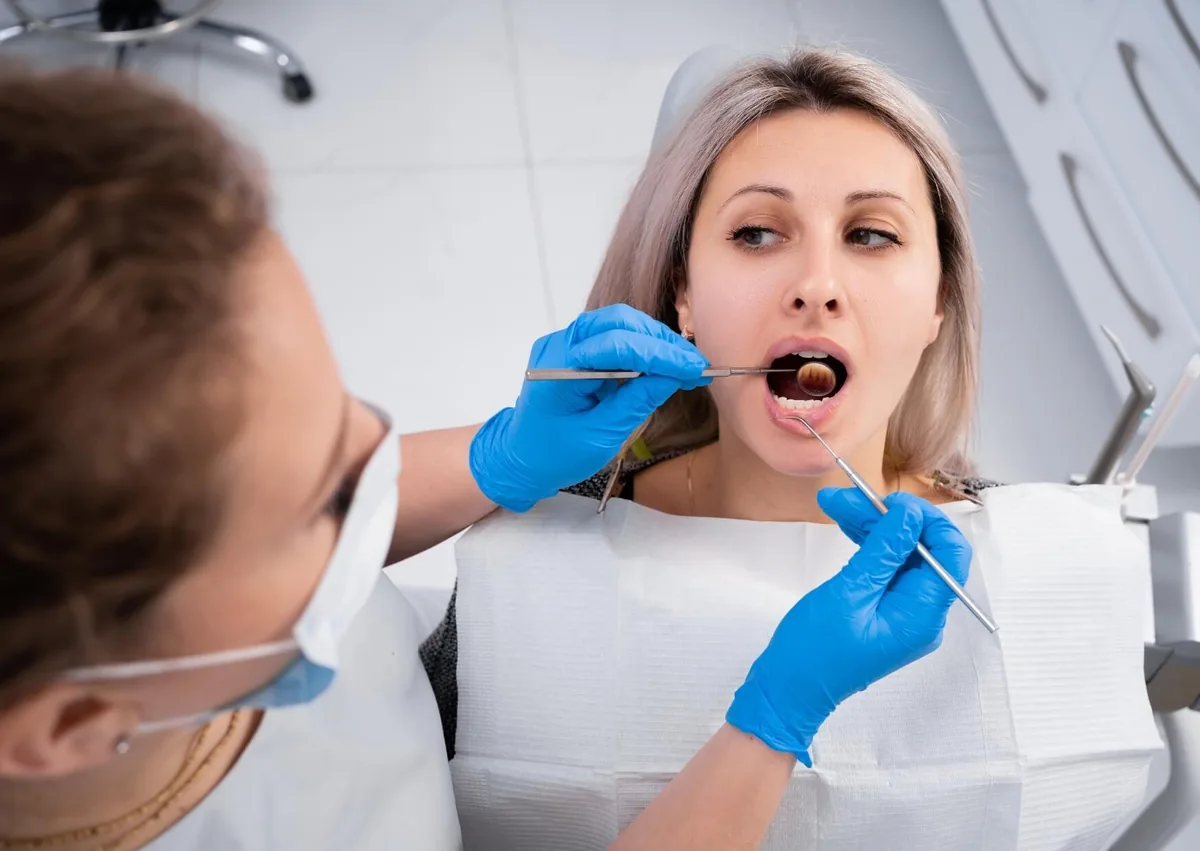
Arrange an exam with your dentist or a medical professional if a sore lasts longer than two weeks, keeps returning, is unusually large, becomes more painful, or does not steadily improve. If you feel nervous about being seen, these tips may help you soothe dental anxiety.
Prompt evaluation is also wise if you have multiple ulcers, sores elsewhere on the body, fever, rash, swollen glands, unexplained weight loss, or trouble eating and drinking.
Seek urgent care for trouble breathing or swallowing, rapidly increasing facial or neck swelling, signs of severe dehydration, or a severe systemic reaction, and consider emergency dental care when dental-related swelling or infection is suspected.
Depending on the cause, a clinician may recommend a prescription topical treatment, smooth a sharp tooth, adjust an appliance, or coordinate medical testing. A sore that persists may occasionally need further testing, including a biopsy, to confirm the diagnosis.
Tracking when sores appear, how long they last, possible triggers, and any other symptoms can make the visit more useful. If the area is not following the usual healing pattern, a timely dental exam is the safest next step.
If your sore lasts longer than two weeks, is unusually large, or causes severe pain, a dental evaluation can clarify the cause and begin targeted treatment. Contact Farhoumand Dentistry for general dentistry in Vienna, VA and nearby Tysons Corner, VA or McLean, VA to arrange care; call (703) 636-2442 to schedule.
A very small sore may feel much better within a few days, but complete healing often still takes 7 to 14 days. Less pain is a good sign, but the sore should also keep shrinking.
Delayed healing may happen because of continued irritation, a larger aphthous ulcer, an underlying health issue, or a different kind of oral lesion. A sore that lasts beyond two weeks should be examined because appearance alone cannot confirm the cause.
No. Typical canker sores are not contagious and cannot be spread by kissing, sharing food, or using the same utensils.
A dentist cannot make every sore disappear immediately, but treatment may reduce pain, inflammation, or healing time in some cases. An exam can also identify a mechanical trigger or determine whether the lesion needs further investigation.
Some people get recurrent canker sores, often starting in childhood or adolescence. Frequent, severe, or changing episodes should be discussed with a clinician to look for triggers, nutrition issues, medication effects, or underlying conditions.


