
A tooth implant usually takes three to nine months from evaluation to the final crown, though some cases move faster and others take a year or longer if extraction, grafting, or slower healing is involved.
The implant placement visit itself often takes only one to two hours for a single tooth, but most of the timeline is the healing period that lets bone attach securely to the implant. For a personalized discussion of options and timing, a clinician experienced with dental implants can review your imaging and medical history.
If you're weighing options for replacing a missing tooth or worried about how long treatment will take, dental implants offer a predictable path to restoring chewing and appearance. Farhoumand Dentistry in Vienna, VA coordinates evaluation, grafting, and prosthetic planning to match timelines to your needs.
Dental implant treatment happens in stages rather than in one long appointment. In a straightforward case, the process includes an exam, imaging, implant placement, healing, and the final replacement tooth.
Some patients can have an implant placed right after a tooth is removed. Others need the area to heal first, and some may wear a temporary tooth during that time.
|
Treatment Stage |
Common Time Estimate |
Main Purpose |
|---|---|---|
|
Consultation and planning |
1 or more visits |
Assess oral health, bone, bite, and medical history |
|
Tooth extraction, if needed |
Same day or separate visit |
Remove a tooth that cannot be restored |
|
Bone grafting, if needed |
Often 3 to 6 months of healing |
Build adequate support for the implant |
|
Implant placement |
About 1 to 2 hours for one implant |
Position the implant fixture in the jaw |
|
Osseointegration |
Commonly 2 to 6 months |
Allow bone to attach to and stabilize the implant |
|
Final crown |
Usually 2 or more visits |
Design, fit, and place the visible replacement tooth |
These stages may overlap, so the timeline is not always a simple matter of adding each estimate together. A clinical exam and appropriate imaging give the most accurate answer for your case.
The condition of the implant site is one of the biggest timing factors. Active gum disease, infection, bone loss, or a recent extraction may need treatment or healing before implant placement.
The location of the missing tooth also matters. Upper-jaw bone is often less dense than lower-jaw bone, and upper back teeth may need sinus-related planning.
Other factors that can extend treatment include:
Following postoperative instructions helps support predictable healing. No supplement, shortcut, or home remedy can replace the biological time needed for bone integration.
The first visit usually includes an oral exam, dental X-rays, and sometimes a cone-beam CT scan. This imaging helps the clinician evaluate bone volume, nearby nerves and sinuses, gum health, bite forces, and space for the replacement tooth.
Your medical history also matters. Conditions such as uncontrolled diabetes, immune disorders, prior head or neck radiation, certain medications, and tobacco use can affect healing and may change the treatment plan.
If a damaged tooth is still present, it may be removed before implant placement or during the same visit. Whether that is possible depends on infection, bone support, and the shape of the site.
A bone graft may be recommended if the jaw is too narrow or has lost volume after tooth loss. Larger grafts or sinus augmentation usually require added healing time before the implant can be placed or restored safely.
The implant is a small post, usually made of titanium, placed in the jaw under local anesthesia. Sedation may be available when appropriate, but it does not shorten healing.
During osseointegration, bone grows into close contact with the implant surface. This healing stage creates the stability needed for chewing, which is why even a quick surgery can still require months before the final tooth is attached.
After healing, an abutment connects the implant to the crown. In some cases, it is attached during implant placement, while in others a short second procedure is needed to uncover the implant.
Digital scans or impressions are then used during implant restoration to make the final crown. The dentist checks the fit, appearance, and bite before securing it.
Many adults missing one or more teeth may be candidates if they have enough bone, healthy or well-managed gums, and medical risks that can be controlled. Age alone is usually less important than healing ability and daily oral hygiene.
Implants are generally delayed until jaw growth is complete. Patients with untreated gum disease, active decay, or uncontrolled medical conditions may need those issues addressed first.
Long-term maintenance also matters. An implant cannot get a cavity, but the surrounding gum and bone can still become inflamed or infected if home care and professional maintenance are neglected.
A dental implant usually takes longer than a bridge or removable partial denture. Its main advantage is that it replaces the missing tooth without depending on removable hardware or, in many cases, reshaping neighboring teeth.
|
Option |
Typical Treatment Pattern |
Important Consideration |
|---|---|---|
|
Dental implant and crown |
Surgery plus months of healing |
Preserves adjacent tooth structure but requires adequate bone and healing |
|
Conventional dental bridge |
Often completed over several weeks |
Neighboring teeth usually must be prepared to support the bridge |
|
Removable partial denture |
Often made over several visits |
Less invasive, but removable and may feel less stable |
|
Temporary tooth |
May be available relatively quickly |
Maintains appearance during healing but is not the final restoration |
The best choice depends on the tooth location, bone support, neighboring teeth, budget, and personal priorities. If cost is part of your decision, see the cost of dental implants.
Most patients have mild swelling, soreness, bruising, or light bleeding for a few days after surgery. Many return to routine, nonstrenuous activity within a day or two, though recovery varies by procedure and sedation.
The area may feel better long before the implant is fully integrated. Patients should follow instructions for eating, cleaning, and temporary tooth use rather than testing the implant by chewing hard foods on it.
Call the treating office promptly if pain or swelling gets worse after first improving, bleeding continues, fever develops, or the implant feels loose. Seek urgent medical care for trouble breathing or swallowing, rapidly spreading swelling, or uncontrolled bleeding.
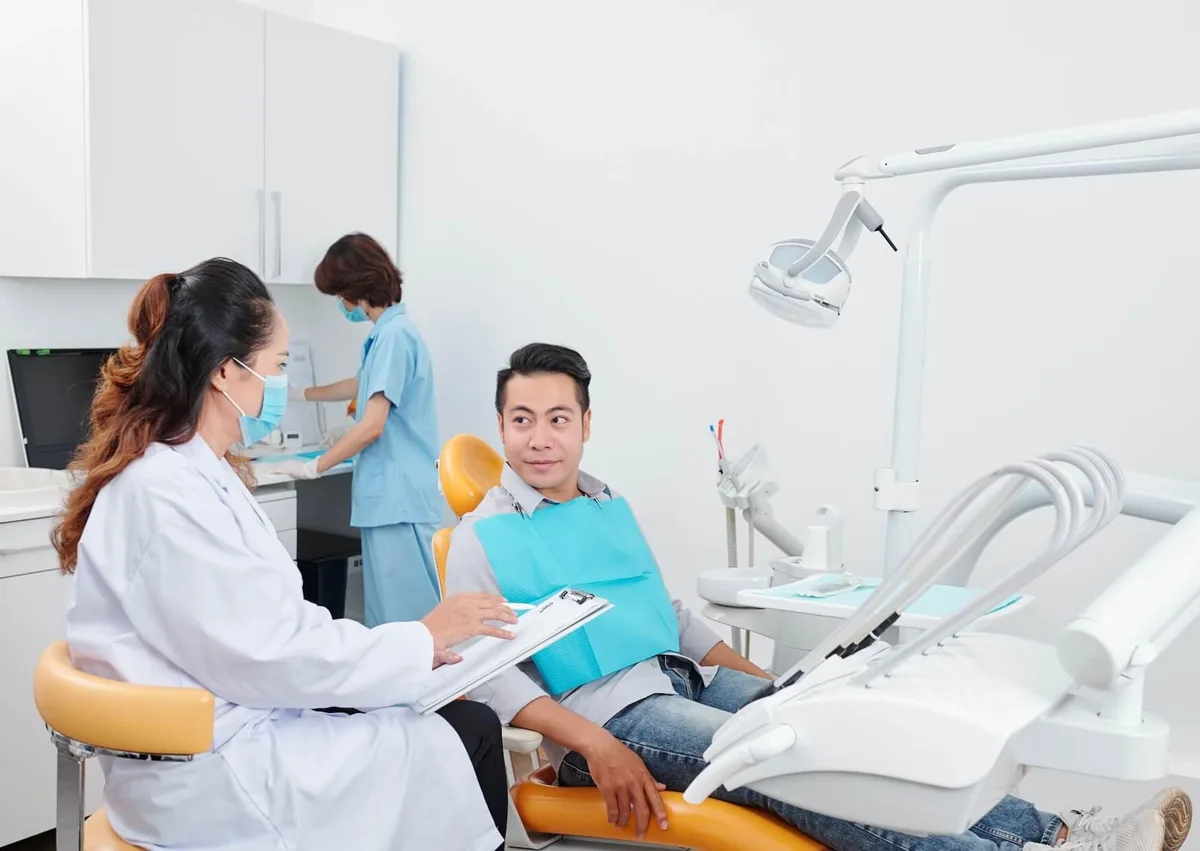
A precise timeline is possible only after an exam and imaging. Ask whether your case may involve extraction, grafting, a temporary tooth, separate abutment surgery, or specialist coordination.
It also helps to ask for an estimate of both total treatment time and number of visits. Reviewing tips for preparing for oral surgery can make the process smoother.
The safest plan balances efficiency with stable healing and a restoration that fits your bite well. A personalized consultation can clarify candidacy, alternatives, expected costs, and when you can return to comfortable function.
A focused consultation will clarify whether extraction, grafting, or immediate loading fits your case and provide a clear timeline. Call Farhoumand Dentistry for dental implants in Vienna, VA, serving Tysons Corner, VA and McLean, VA at (703) 636-2442 to schedule your visit.
Sometimes, yes. The implant and a temporary tooth may be placed on the same day, but the implant still needs months to integrate with bone, and the temporary tooth often must stay out of heavy biting contact; in some cases clinicians use same-day crowns for provisional esthetics when appropriate.
An implant may be placed the same day as extraction, after several weeks of soft-tissue healing, or after several months of bone healing. The right timing depends on infection, bone condition, gum shape, and how much initial stability the implant can achieve.
Placing one implant often takes about one to two hours, including preparation and postoperative checks. Multiple implants, grafting, sedation, or a more complex site can make the visit longer.
Many implants heal for about two to six months before the final crown is placed. The clinician confirms readiness based on the site, healing response, and implant stability rather than the calendar alone.
Not always. Depending on the location and your bite, options may include a removable temporary tooth, a bonded temporary replacement, or a provisional crown, as long as it does not interfere with healing.