
Bonding usually costs about $300 to $600 per tooth in the United States, though the final fee can be lower or higher. The average cost depends on which tooth is being treated, how much resin is needed, how complex the repair is, local dental fees, and whether insurance considers the procedure cosmetic or medically necessary.
Bonding is often a practical choice for small chips, narrow gaps, localized discoloration, or minor shape concerns. A dental exam is still needed to confirm that the tooth and bite can support the restoration and to provide an accurate written estimate.
Farhoumand Dentistry in Vienna, VA provides careful evaluation and individualized plans that help you understand likely outcomes, costs, and maintenance so you can decide with confidence.
Dentists usually price composite bonding by the tooth, not by the full smile. A small edge repair may cost less than reshaping most of a front tooth because larger changes require more material, contouring, and chair time.
Common factors that affect the fee include:
Ask whether the estimate includes the exam, imaging, bonding, polishing, and any follow-up adjustment. If several teeth are involved, request an itemized treatment plan so each proposed charge is easy to understand.
Dental insurance may help pay for bonding when it restores a tooth damaged by decay, injury, or structural wear. It often does not cover bonding done only to change the color, spacing, length, or shape of a healthy tooth.
Benefits vary by plan. Deductibles, annual maximums, waiting periods, frequency limits, and downgrades may all affect what you pay.
A pre-treatment estimate can help clarify expected coverage, but it is not a guarantee of payment. Health savings accounts and flexible spending accounts may also apply in some restorative cases, though patients should confirm eligibility with their plan administrator or tax adviser.
Composite bonding uses a tooth-colored resin to repair or reshape enamel. It may work well for a minor chip, a small gap, an uneven edge, a modest shape change, or discoloration that does not respond well to whitening.
The tooth should usually have enough healthy structure to hold the resin. Active decay, gum disease, major fractures, severe enamel loss, or a bite that places heavy force on the area may need treatment first.
Bonding may be less predictable for someone who grinds or clenches, bites fingernails, chews ice, or needs a major change in tooth position. In those situations, a dentist may discuss a night guard, orthodontic treatment, veneers, or a crown depending on the diagnosis, especially if the goal is to fix grinded teeth.
The dentist first evaluates the tooth, surrounding gums, and bite. X-rays may be recommended if decay, trauma, or deeper structural damage is suspected, but they are not necessary for every cosmetic case.
A shade-matched composite resin is placed on the prepared surface, shaped carefully, and hardened with a curing light. The material is then refined and polished so it blends with nearby teeth and fits the bite comfortably.
Many simple cases are completed in one visit. Numbing is often unnecessary when treatment stays within enamel, but local anesthesia may be used if decay is removed or the area is sensitive.
Teeth bonding often lasts three to ten years, but that range is not a guarantee. Longevity depends on the tooth location, bite force, oral habits, diet, maintenance, and the size of the bonded area.
Composite resin can stain and lose polish over time. It is also more likely to chip than porcelain, especially on the biting edges of front teeth.
Daily brushing with fluoride toothpaste, cleaning between teeth, regular dental visits, and avoiding habits like chewing ice can help protect the result. If bonding becomes stained or damaged, it can often be polished, repaired, or replaced.
The lowest-cost option is not always the best one. The right treatment depends on the concern, the amount of healthy tooth structure, bite forces, cosmetic goals, and the likelihood of future maintenance.
|
Option |
Often Best Suited For |
Tooth Preparation |
Practical Considerations |
|---|---|---|---|
|
Composite bonding |
Small chips, gaps, or shape changes |
Usually minimal |
Lower initial cost, repairable, may stain or chip |
|
Porcelain veneers |
Broader front-surface color or shape changes |
Usually some enamel removal |
Higher cost, strong color stability, not reversible in many cases |
|
Heavily damaged, weak, or extensively restored teeth |
Substantial reshaping |
Covers the tooth and provides more structural protection |
|
|
Generalized natural-tooth discoloration |
None |
Changes color but does not repair chips or alter shape |
|
|
Orthodontic treatment |
Tooth-position or bite concerns |
No restorative removal |
Moves teeth rather than adding material; treatment takes longer |
A veneer or crown should not be chosen only because it may last longer. Both usually require more tooth reduction than direct bonding.
On the other hand, placing a large amount of resin on a structurally weak tooth may not provide dependable protection. That is why treatment choice should be based on diagnosis, not price alone.
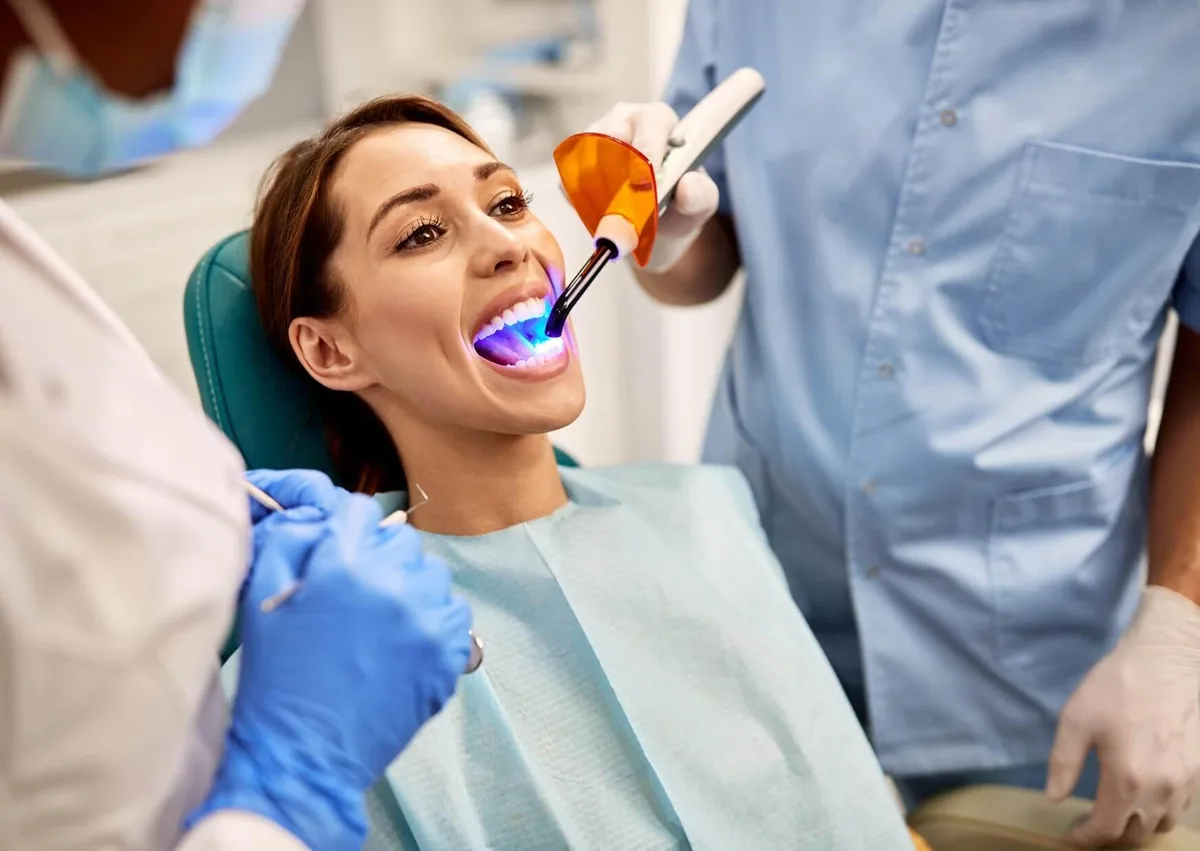
Bonding can create a natural-looking improvement, but composite resin does not behave exactly like enamel. It has limits in color matching, translucency, stain resistance, and longevity, especially when several visible teeth are being changed.
If at home teeth whitening or professional teeth whitening is part of the plan, whitening is often completed before the bonding shade is selected. Whitening products do not lighten existing resin, so future whitening can create a mismatch.
Seek prompt dental care if a bonded tooth develops significant pain, swelling, fever, drainage, facial swelling, or trouble swallowing or breathing. A new fracture, persistent temperature sensitivity, a sharp edge, or a bite that feels high also deserves evaluation rather than an at-home fix.
A consultation helps identify the cause of the concern, review realistic outcomes, compare alternatives, and provide a personalized fee estimate. Bringing insurance details and asking about likely maintenance can make the decision more predictable.
A consultation will confirm whether teeth bonding is the right conservative choice for your concern and produce a personalized estimate and treatment plan. Call Farhoumand Dentistry for bonding in Vienna, VA and nearby Tysons Corner, VA and McLean, VA at (703) 636-2442 to schedule a visit or request more details.
Yes. Direct composite bonding usually has a lower initial cost per tooth than porcelain veneers.
Veneers may offer better stain resistance and longer service life, but they typically cost more and often require removal of some enamel.
Often, yes. The schedule depends on how many teeth are being treated and how complex the design is.
Treating multiple teeth may require a longer appointment or staged visits to maintain accurate shape, symmetry, and bite.
Cosmetic bonding limited to enamel is often comfortable and may not require anesthesia. Sensitivity or discomfort is more likely when decay, a fracture, or deeper tooth structure is involved.
Bonding can often repair a small, uncomplicated chip. A large fracture, pain, looseness, color change after trauma, or possible nerve involvement requires a clinical exam and sometimes X-rays before treatment is chosen.
No. Bonding can last for years, but it may stain, wear, chip, or detach over time and may eventually need polishing, repair, or replacement.