
If your teeth look shorter, feel sensitive, or chip more easily, grinding may be the reason. Teeth worn down by grinding can often be repaired, but the best results usually come from treating both the damage and the grinding itself.
Dentists usually look at two issues at the same time. One is the worn, cracked, or broken tooth structure. The other is bruxism, which means repeated clenching or grinding of the teeth.
In mild cases, treatment may be simple and conservative. In more advanced cases, rebuilding the bite, protecting the teeth at night, and replacing lost tooth structure may all be part of the plan.
Farhoumand Dentistry provides restorative dentistry in Vienna, VA, to address worn and damaged teeth and may offer the kind of care you are reading about here.
Grinding puts repeated force on the teeth, often during sleep. Over time, that pressure can flatten chewing surfaces, wear down enamel, and create small fractures that later turn into larger cracks.
Enamel is the hard outer layer of the tooth. When enough enamel is lost, the softer inner layer called dentin can become exposed, which may make teeth look darker, feel rougher, and react more to cold, sweets, or brushing.
Some patients also notice jaw tension, morning headaches, or soreness near the jaw joints. Others first notice cosmetic changes, such as shorter front teeth or uneven edges. TMJ and headaches are often related; read more in our article on TMJ and headaches.
Damage does not always happen evenly. One side may wear faster, older dental work may begin to fail, and certain teeth may chip because the bite is no longer balanced.
A dental evaluation is a good idea if your teeth look shorter than they used to, the edges appear translucent, or fillings keep breaking. These patterns often suggest ongoing force that the teeth are no longer tolerating well.
Other common signs include tooth sensitivity after grinding damage, rough edges that catch on the tongue, small chips, or a feeling that the bite has changed. Some patients also notice scalloped marks on the sides of the tongue from clenching pressure.
More urgent warning signs include a cracked tooth, pain when biting, swelling, sudden severe sensitivity, or a tooth that feels loose. These symptoms can point to deeper structural injury and should not be ignored.
There is no single repair for every case. The best option depends on how much tooth structure is missing, whether the teeth are still strong enough for conservative treatment, and whether grinding is under control.
Bonding uses a tooth-colored resin to rebuild small worn areas, especially on front teeth. It is usually the least invasive option and can improve shape quickly.
However, it may not last as long as stronger restorations if heavy grinding continues.
Same-day crowns may be recommended when a tooth has lost substantial structure, has a crack, or already has a large failing filling. A crown covers and reinforces the visible part of the tooth, which can improve strength and restore chewing function.
CEREC crowns can often provide this protection in a single visit; learn more about CEREC crowns here.
Veneers are thin coverings placed on the front surface of teeth.
They can improve appearance, but they are not the best answer for every grinder, especially if bite forces are strong or the teeth are already structurally compromised.
For molars and premolars, some dentists use partial-coverage restorations called onlays or overlays. These rebuild the chewing surface while preserving more natural tooth structure than a full crown when the tooth is still a good candidate.
When many teeth are worn down, treatment may involve rebuilding the bite across multiple teeth.
This is sometimes called full-mouth reconstruction for worn teeth, and it is usually planned carefully with models, photos, and bite analysis before final treatment begins. Comprehensive approaches like this are part of modern restorative dentistry.
Fixing visible wear is only part of the solution. If grinding continues without protection, new dental work can chip, loosen, or wear down just like the original teeth.
A custom night guard is one of the most common ways dentists help protect teeth from sleep grinding. It does not cure every cause of bruxism, but mouth guards can reduce direct tooth-on-tooth wear and help protect crowns, bonding, and natural enamel.
Dentists may also look at bite imbalance, missing teeth, airway concerns, stress-related clenching patterns, and jaw muscle overuse. Not every patient needs the same workup, but persistent grinding usually needs more than a cosmetic fix alone.
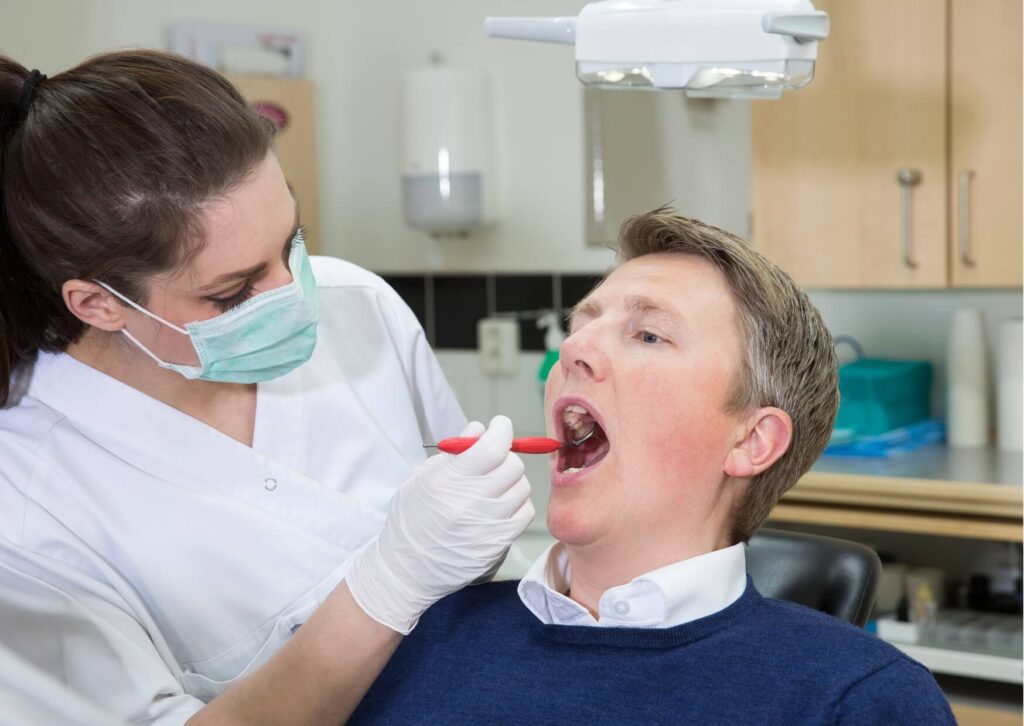
A dentist will usually examine the pattern of wear, check for cracks, test sensitive teeth, and review your bite. Photos, X-rays, and sometimes digital scans help show how much structure has been lost and whether the teeth can be restored conservatively.
In more complex cases, the dentist may measure the vertical dimension of the bite. This means the space between the upper and lower jaws when the teeth come together, which can change after long-term wear.
This visit also helps separate short-term and long-term goals. Some patients need immediate protection for a painful or fractured tooth first, followed by more complete rebuilding later.
| Level of Wear | Common Findings | Possible Dental Approach |
| Mild | Slight flattening, small chips, early sensitivity | Monitoring, polishing rough edges, bonding, custom night guard |
| Moderate | Noticeable shortening, repeated chipping, exposed dentin | Bonding, onlays, crowns on selected teeth, bite protection |
| Severe | Major shortening, cracks, bite collapse, chewing difficulty | Comprehensive bite reconstruction, crowns or overlays on multiple teeth, protective appliance |
This table is only a general guide. The same amount of visible wear can mean different things depending on the bite, tooth position, and whether cracks or pain are present.
Yes, sometimes. If the wear is limited and the teeth remain structurally sound, bonding or partial-coverage restorations may restore shape without placing crowns on every damaged tooth.
That said, avoiding crowns at all costs is not always the most conservative choice. When a tooth is badly weakened, a well-planned crown may protect it more predictably than repeated smaller repairs.
The better question is not whether crowns can be avoided. It is whether the chosen treatment will hold up safely under your bite forces.
No dental restoration lasts forever, especially in a mouth with active grinding. Small bonding repairs may wear or chip sooner than crowns or ceramic overlays, but larger restorations also face risk if heavy clenching continues.
Long-term success usually depends on three things. The diagnosis has to be accurate, the restoration has to match the level of force, and the teeth need ongoing protection, often with a night guard and regular follow-up. In general, how long crowns last depends on the material, bite forces, and how well they are maintained.
A common mistake is rushing into cosmetic repair without understanding the bite. Teeth that have been ground down usually need a functional plan, not just a visual one.
Call a dentist promptly if you have sudden pain when biting, a fractured tooth, swelling, bleeding around one tooth, or sensitivity that becomes sharp and persistent. These symptoms may indicate a crack extending deeper into the tooth or irritation of the dental pulp, which is the soft tissue inside the tooth.
If facial swelling, fever, or trouble opening the mouth develops, urgent evaluation is especially important. Grinding itself is common, but severe pain or swelling is not something to watch casually at home. Reviewing common cracked tooth symptoms can also help you recognize when prompt care is needed.
If you experience sudden breakage, pain, or swelling, seek emergency care right away.
If you think your teeth are getting shorter, weaker, or more sensitive, a timely exam can make treatment simpler and more conservative. Early repair often means more options and less rebuilding later.
Farhoumand Dentistry in Vienna, VA offers restorative dentistry to help patients restore function and esthetics; we also serve nearby communities such as Tysons Corner and McLean. Call (703) 636-2442 to schedule an evaluation.
Yes. Dentists can often restore worn teeth with bonding, crowns, onlays, or more comprehensive bite reconstruction, depending on how much structure has been lost.
A night guard helps protect teeth from further wear, but it does not rebuild enamel or repair cracks and chips that already exist. Many patients need both protection and restorative treatment.
No. Some worn teeth cause no pain at first, even when damage is significant. Others become sensitive, chip easily, or develop pain only after a crack forms.
That depends on the pattern of wear, the bite, and whether multiple teeth are affected. In severe cases, a dentist may recommend crowns or overlays on several teeth along with bite protection.
Often, yes. Bonding can work well for small to moderate wear on front teeth, especially when enough healthy tooth structure remains and the bite is managed properly.